Ever wonder what lies at the bottom of Lake Union. Can you imagine 80 shipwrecks in such a small lake? This video shows a joint survey and the exploration efforts in Lake Union, Seattle, performed by the Maritime Documentation Society, Global Underwater Explorers Seattle, DCS Films and Puget Sound Divers. Using side scan sonar, they have mapped the bottom and discovered numerous wrecks, and even an upside down Buick.
Please add these comments to the official record of comments regarding the Final Recommendations for the Shoreline Management Plan.
These comments are directed primarily at those proposed regulations affecting Live-aboards in the Shoreline Management Area. As President of Lake Union Liveaboard Association representing approximately 140 members, these comments are provided to support those members and to encourage the continuation of the liveaboard community.
Comment period too short.
In reviewing the Final Recommendations, we found that there are SIGNIFICANT differences between Draft #2 and the Final Recommendations. While we are cautiously encouraged by some of the changes in the Final Recommendations, we found very quickly that there was a lot of confusion regarding this large, complicated document. With the large number of changes, we feel that there has definitely not been enough time allotted for the community at large to review and analyze this document and to formulate a response. We have 2 recommendations in this regard;
Extend the comment period until August 15th. This will permit organizations like LULA, SLA, and LUA to have enough time to review the document, discuss, formulate responses, and provide considered feedback that would accompany the document when submitted to the Mayor and City Council.
Provide a Plain Language version, or a document similar to the CAM-229 that would clearly indicate the effect of these proposals on the liveaboard community.
New Liveaboard Regulations / Recreational Vessel definition are inappropriate The proposals regulating liveaboard use on recreational vessel contains constraints (to define a recreational vessel) that seem inappropriate and irrelevant to the stated purpose of the Shoreline Management Act. These regulations again seem to target a particular SHAPE of vessel, rather than address the use of the vessel. By creating these regulations, DPD has indicated that if you stick to a particular SHAPE, you are golden. This is contradictory to the stated purpose of the Shoreline Master Program. For example, liveaboards that contribute a certain amount, through their liveaboard activities, toward the environmental impact, would continue to contribute the same to the environmental impact on a vessel that meets the stated criteria. Therefore, having the new criteria simply means a different SHAPED vessel contributing the same environmental impact. Once again, the SHAPE of the vessel is restricted, but the activity is not.
Examples of these constraints, which have zero affect on the impact to the environment are:
Decks fore & Aft for Line Handling. This will make a number of Sea Going recreational vessels non-compliant for the purpose of living aboard. The ability to handle lines does NOT require FORWARD and AFT decks. For example, our vessel “The KevLin” has very good line handling capability, but does NOT have an aft deck. We instead have Paddle Wheels on the aft of our boat, but we ARE none-the-less, truly and factually, a recreational vessel. Having a deck fore and aft is not a determining factor of a vessel being “recreational.”
Symmetrical Embarkation points. These are unnecessary for vessel safety, have no relevance to defining a recreational vessel, and contribute NOTHING to environmental impact. Frequently Yachts are designed WITHOUT symmetrical embarkation points. Did you mean to say “Embarkation points on both port and starboard sides?” Again, Symmetrical Embarkation points are not a determining factor of a vessel being “recreational.”
Symmetric Mooring Hardware. Again, I think this should be worded differently – something like “mooring hardware sufficient for mooring on either the port or starboard side.” Frequently mooring hardware is not symmetric as a result of gangways, gates, windows, doors, etc., but the lack of symmetry does not affect the safety, nor does it have any bearing on whether a vessel is recreational.
Whether the delivery voyage from place of purchase to moorage location was made without assistance. This phrase is very dangerous if interpreted strictly. Requiring vessels to be delivered without assistance could cause serious safety issues. Marinas are frequently precarious places, and MOST vessels require some assistance in their delivery. This can come in a number of forms. Vessels manufactured in China may be delivered by Cargo Ship, which certainly constitutes “assistance.” On a more basic level, most vessels are delivered with Deck Hands, and often with guide boats to assist during tricky maneuvering in crowded marinas. Without this “assistance” vessels are at risk of damaging other vessels, and possibly endangering life & limb. In addition, many insurance companies will not insure the owner to deliver their own vessel. Once again, this action has no bearing on whether or not a vessel is “Recreational”
The vessel complies with the Sail Area-Length Ratio (SALR). This clause was most certainly added to target a specific shape of vessel. If the determination of a recreational vessel is based on it’s shape, this is completely new to the vessel industry. As far as I know, no manufacturer has ever used “SHAPE” to determine if a vessel is recreational. While SALR has everything to do with “SHAPE”, it has nothing to do with;
determining if a vessel is Recreational
determining the Safety of a vessel
determining the Environmental Impact of a vessel
Based on the SALR, a vessel that is 100 ft long, 10 ft high, and 2 ft wide, would be permitted as a liveaboard, while a vessel that is 40 ft long, 20 ft high, and 20 ft wide, would not be permitted as a liveaboard.
The SALR is NOT a ratio that is used by Naval Architects to determine stability. This is an arbitrary measurement that has no correlation to safety, environmental impact, or determining if a vessel is recreational. This clause was created to eliminate certain shapes of vessels, and is NOT a valid indicator of a vessel being designed as “Recreational”. Given these facts, this clause is discrimination on the basis of SHAPE and SHAPE alone and should be completely stricken.
Thank you for considering these comments. Please include these comments to the Mayor and the City Council, with the understanding that these comments have been created in haste and the full Final Recommendations have NOT been completely reviewed. We reserve the right to submit further comments, directly to the Mayor and the City Council and hope that it is clearly communicated that there has NOT been a sufficient amount of time allowed to review these final recommendations.
Please accept my apology over the previous email to the membership. In that email I indicated that existing houseboats would not be grandfathered in under the new proposals. I was mistaken. The regulations are long and confusing and the section 23.60.214 Standards for live-aboard uses on vessels seems to indicate no grandfathering, however, there are 2 sections (23.60.122 Nonconforming uses and 23.60.124 Nonconforming structures) that override the “Standards for live-aboard uses on vessels.”
To be certain of this, I have communicated with Magaret Glowacki at DPD;
Kevin: These 2 sections (23.60.122 & 23.60.214) seem to be in conflict with each other since one talks about uses on recreational vessels and seems generic across all recreational vessels. Does this mean that live-aboard vessels that were legal prior to date of implementation do not have to comply with this section???”
Margaret: The existing regulations apply to the existing uses, structures and vessels, which means that if you are living on the water you need to be a vessel as defined under the current regulations (“Vessel” means ships, boats, barges, or any other floating craft which are designed and used for navigation and do not interfere with the normal public use of the water, including historic ships which do not have means of self-propulsion and steering equipment) or a house barge or a floating home, also defined under the current regulations. This will not change for the existing uses, structures and vessels.
Kevin: Is there some stamp, certification, or other evidence that will provide proof of compliance at the time of implementation of these regulations?
Margaret: DPD proposed a registration system for live-aboards; however, we were met with great opposition to this proposal. You can apply for an interpretation of the existing regulations to have the determination made for a specific floating structure and there is a fee for this interpretation.
Kevin: I was under the impression that there would be no comments or modifications after the Final Recommendations, however, from email exchanges, it looks like there may be a possibility for changes to these Recommendations. Is that true?
Margaret: The official comment and appeal period for SEPA run through July 20th . Comments submitted after that will be considered as we can.
Comment:
All in all, I believe the Lake Union Liveaboard Association, through its active campaign of letter writing, phone calls, and meetings with DPD has been extremely effective in combating the inappropriate proposals contained in Draft #1 and Draft #2. I am extremely appreciative of everyone’s efforts and thank you all for your hard work. There are some remaining issues, however, I believe we were successful in our efforts and this Final Recommendation is a vast improvement over Drafts 1 and 2.
Remaining issues:
Send comments in immediately. I believe we had very short notice regarding the comment period. The comment period ends tomorrow, so immediate action is required if you want to be heard.
The new regulations (for new liveaboard vessels) call for symmetrical embarkations (recreational vessels do NOT require this). This requirement is not pertinent to the stated purpose of the Shoreline Management Act (environmental improvement). Perhaps a revision that requires embarkation points on the port and starboard sides would be a reasonable compromise (although Recreational vessels do not require this and it does nothing for environmental issues).
The new regulations (for new liveaboard vessels) call for fore and aft decks (recreational vessels do NOT require this). This may make some very traditional, sea-worthy vessels non-compliant for liveaboard purposes. Again, this is irrelevant to the stated purpose of the Shoreline Management Act.
The new regulations (for new liveaboard vessels) call for the requirement of having the vessel being delivered from the place of purchase to its final destination unassisted. This section needs removed as it is impractical. Many vessels require assistance to be delivered – i.e. deck hands, help at the dock in tight marinas, etc. This section is unreasonable and unnecessary. Many insurance companies will not insure the vessel until it is in its final destination, necessitating towing to that point.
The new regulations (for new liveaboard vessels) call for the requirement of meeting a Sail Area to Length Ratio (SALR). This section needs removed as it is a non-standard measurement for stability, is not used by any Naval Architects, and has no relevance to the stated purpose of the Shoreline Management Act (environmental improvement). Per this ratio, it would be okay for a 100 ft long vessel that is 9 ft high and 2 feet wide to be used as a liveaboard, while a vessel that is 40 feet long, 20 ft high and 20 ft wide would not be permitted. Most Sailboats would not pass this regulation and could not be used as liveaboards.
The constraint for vessels with SALR between 10 and 17 is based off of the Sea-Faring Beaufort Scale, which is a measurement used in open oceans. The wind speeds may be reasonable, however, the wave height (3.5 ft) is unrealistic for liveaboards in the shoreline management area, as wave heights of 3.5ft are not possible in the inland waters with corresponding wind speeds.
NOTE: There is current litigation that is being based on the wording in Cam-229 indicating that if you live aboard your vessel, that vessel is defined as “Vessel” means ships, boats, barges, or any other floating craft which are designed and used for navigation…” and the owner of the vessels are being challenged to prove their vessel is/has been “used for navigation.” We are strongly recommending that you have pictures / videos, or other documentation of your vessel being used for navigation. To be “Grandfathered” in, you must meet this definition.
Please be sure to forward this email to all of your fellow Live-Aboards. We will be scheduling a General Membership meeting soon.
DPD’s 2nd Draft of the Shoreline Master Program has been published and has serious consequences for Houseboat and Housebarge owners. Please review these proposals very carefully. DPD has indicated the comment period for the 2nd draft will end 12/9/11. We feel this timeframe is unreasonably short, given the major changes between Draft 1 and Draft 2, the holiday period during the comment period, and give the original comment period was significantly longer.
PLEASE LEND YOUR SUPPORT BY SENDING IN YOUR COMMENTS BY 12/9/2011
Maggie Glowacki
700 5th Avenue, Suite 2000
P.O. Box 34019
Seattle, WA 98124-4019
LULA’s position on these regulations are that they are being applied unfairly by only targeting houseboats and house barges, while allowing unlimited growth of liveaboard vessels and allowing liveaboard vessels to dump grey water unrestricted into Seattle waters.
The LULA board has requested meetings with Margaret Glowacki on multiple occasions and so far we have not been granted a meeting. Why?
LULA has developed an alternative proposal which we believe fairly and reasonably addresses the 2 primary issues (as stated by representatives from DPD and SMP);
Please visit LakeUnionLiveaboard.com for details and to view the Lake Union Liveaboard Association (LULA) alternative proposal.
Experience Houseboat living…
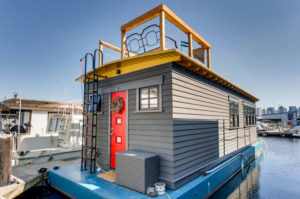
like never before in this fantastic, economical and eco-friendly brand new houseboat. Designed for living and for life on the water, with large windows, spacious areas and comfort not found on other houseboats, the Ranch ECO-Sea Cottage will allow you to experience life on the water without the high cost of “Waterfront” living. Each ECO-Sea Cottage is special ordered with delivery in approximately 12-16 weeks. Give us a call to get started changing your life. These Houseboats are built to order and can be shipped anywhere in the US or Canada. With prices ranging from $110,000 to $275,000, these houseboats provide a level of affordable waterfront living you cannot find anywhere.
Call us at (206) 419-0065 or email us to learn more.
After a nearly 4 year hiatus, Seattle Metropolitan Credit Union has stepped up to the plate to offer houseboat lending in the Seattle area. We salute SMCU for embracing this amazing Seattle tradition which truly helps to define the Seattle character. For those thinking about purchasing a Houseboat in Seattle, this is great news.
The program details allow for 75% financing of the combined sales price plus sales tax, 30 year amortization with a 10 year balloon payment, and rates comparable to those for yacht lending. Credit and Income guidelines are similar to those required for purchasing a home. A Marine survey, and haulout is required. Further details can be obtained by contacting Denise Carlson at (206) 398-5581 or by emailing her at denisec@SMCU.com. For a list of available houseboats, please visit Special Agents Realty.
Compliments International creates social media enhanced websites, allowing your website to become a networking site. Use the power of viral marketing to bring real customers to your website. Do you understand the power of a third party endorsement (referral)? Then bring that concept to your website, instead of just using your website as a signpost.
We strongly endorse Compliments International for website development – give them a call at (877) 839-1122.
Check it out!!! 3 Hot New Listings have just been posted on our site. With prices ranging from $195,000 to $395,000, these new choices make Lake Union Living THE place to locate a great houseboat. Don’t forget, we also do other real estate as well. Check out this fantastic 4800 sq. ft. home near Echo Falls.
There is a storm on the horizon that is seriously going to HURT our economy. The new Appraiser rules HVCC (Home Valuation Code of Conduct) being imposed are likely going to cause further harm to our economy. Though the concept sounds reasonable – i.e. removing the ability for Loan Originators or Real Estate Agents to choose the appraiser, the effect will be disasterous. The new rules support undervaluing homes simply because an appraiser is chosen by the lender. If the lender chooses an appraiser that provides a consistently lesser value, they win because their asset is worth more than the appraiser indicated. Hence the Lender has less risk.
It is assumed that the evil Loan Originators and Real Estate Agents were able to influence the appraiser into providing over inflated values, however, do you really believe the Lenders are more ethical or that for some reason they do not have a vested interest in getting lower valuations? Give me a break. We’ve seen what the big lenders are capable of doing. That is why according to www.ml-implode.com, 342 lenders have imploded since late 2006 by providing loans to people that should not have received them. So, let’s put the power of choosing appraisers in their unbiased hands!?!
Be prepared to see further (unwarranted) devaluation of homes due to this rule.
Recently, I’ve become addicted to a line of games put out by Game Campus including Shot Online (a wonderful golfing game and online community), and MLB Dugout (a baseball simulation).
MLB Dugout is my most recent addition of games that are free to join and free to play, but offer premium items using “Campus Cash.” The game is fun to play and is a quite realistic simulation. You play against online opponents (you can practice against the computer before taking on the real thing). A major appeal to the game is the online interaction, however, they have not implemented the online community in MLB Dugout as well as they have in their other excellent game “Shot Online.” I suspect this will improve with time.
All in all, MLB Dugout is a fun game and I highly recommend it. Check it out at http://mlbdugoutheroes.gamescampus.com/ and I will see you on the field – My team is the Baggers.